
There’s something about Laomendong at night during the May Day holiday that’s hard to put into words — but I’ll try anyway.
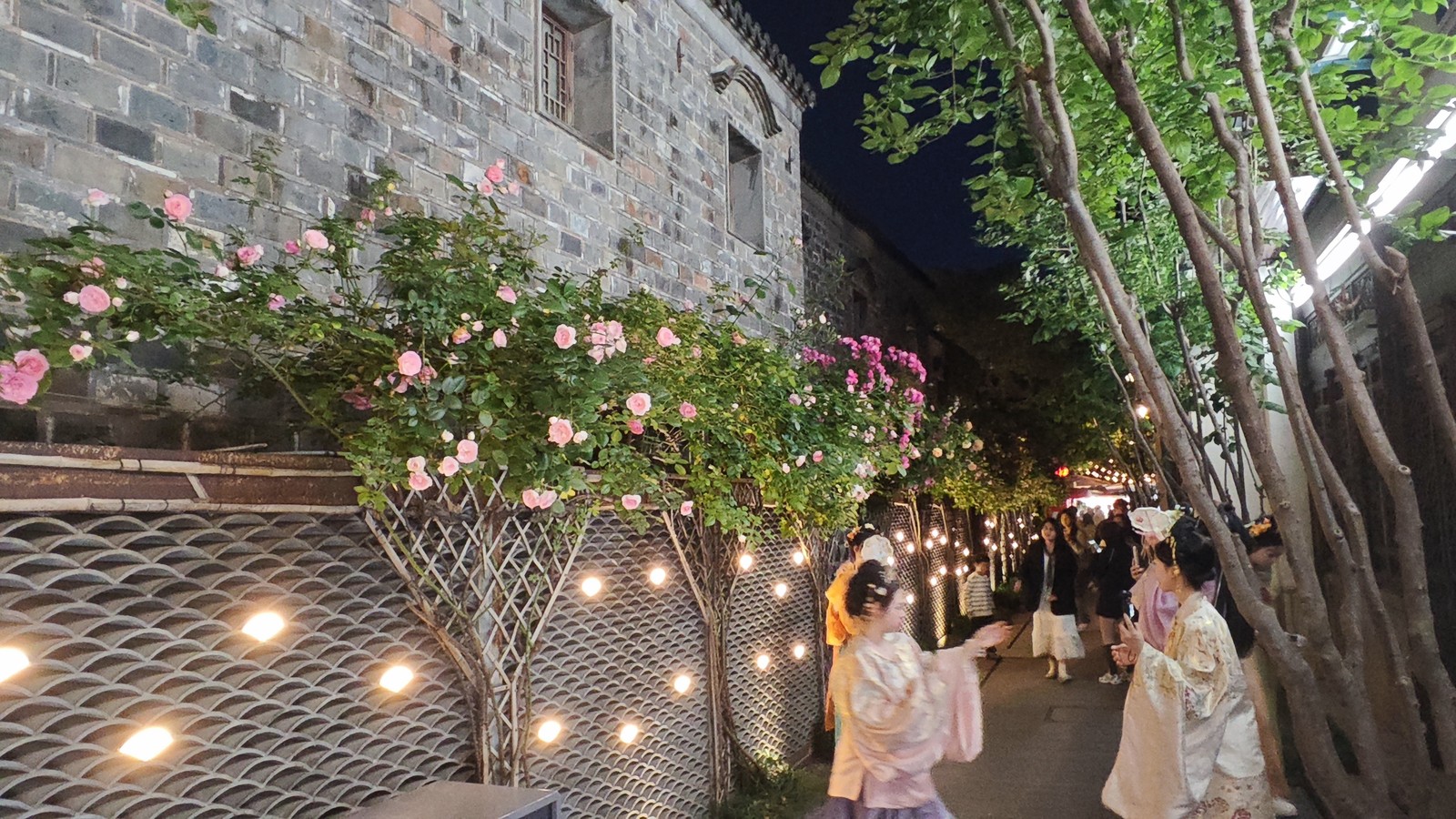
Near the entrance, I spotted a scene that stopped me. A young woman in a flowing hanfu — the traditional Chinese dress — was standing under a cascading wall of pink roses. The contrast was perfect: ancient costume against old brick walls, a phone camera in her companion’s hand capturing something that felt both timeless and completely modern. It’s a cliché of Laomendong at this point — hanfu photos under the rose trellises — but seeing it in person, it still works. The roses are real, the enthusiasm is genuine, and for that split second, it’s beautiful.
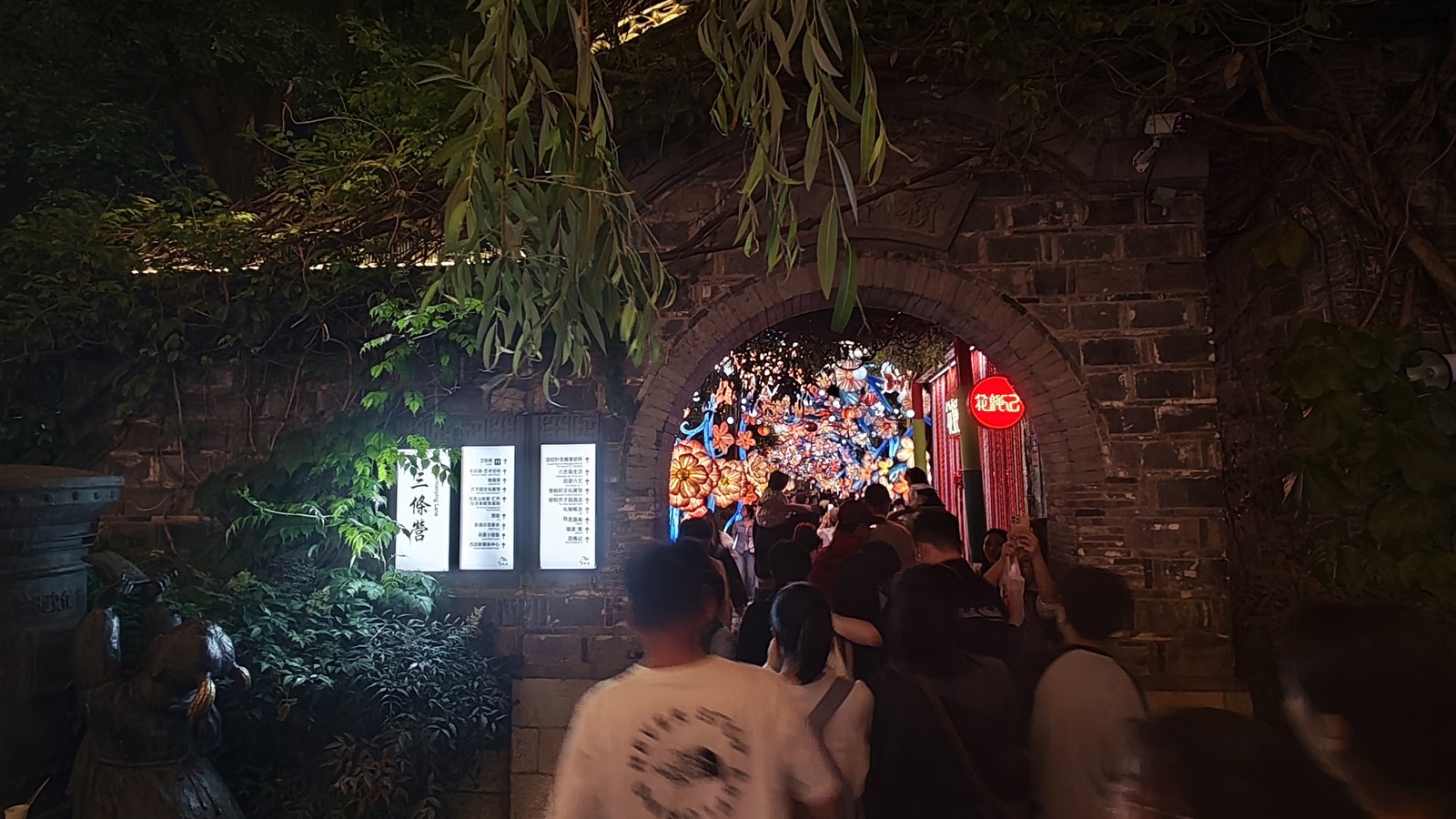
I turned onto Santiaoying — one of the oldest lanes in the area. This is where the lanterns are. Not the commercial LED kind, but the traditional hexagonal paper lanterns strung overhead in neat rows, glowing in warm reds and golds. The effect is transportive; for a moment you’re not in 2026 but in some earlier century when this lane was a bustling market street during festival season. The lanterns bobbed slightly in the evening breeze, casting shifting shadows on the grey brick walls.
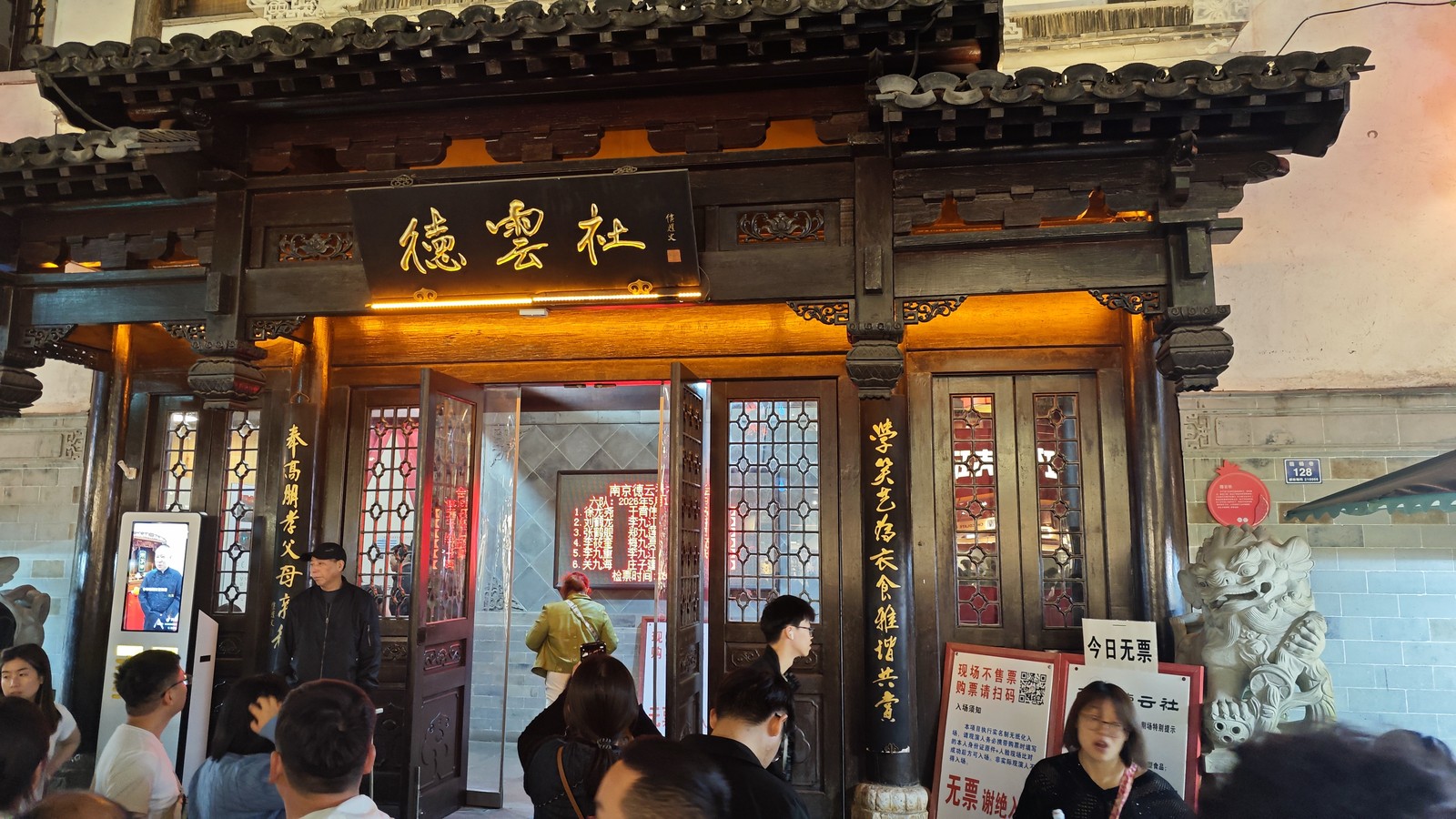
Two theaters anchor the cultural life of Laomendong now. The first is Deyunshe — the famous xiangsheng (cross-talk comedy) troupe founded by Guo Degang. Its Nanjing branch sits in a beautifully restored Qing building, its entrance illuminated with a simple, tasteful sign. On holiday nights, the show is almost always sold out, and you can hear muffled laughter and applause from the street outside. It’s become a destination in itself — people come to Laomendong specifically for the Deyunshe show, then wander the alleys before or after.
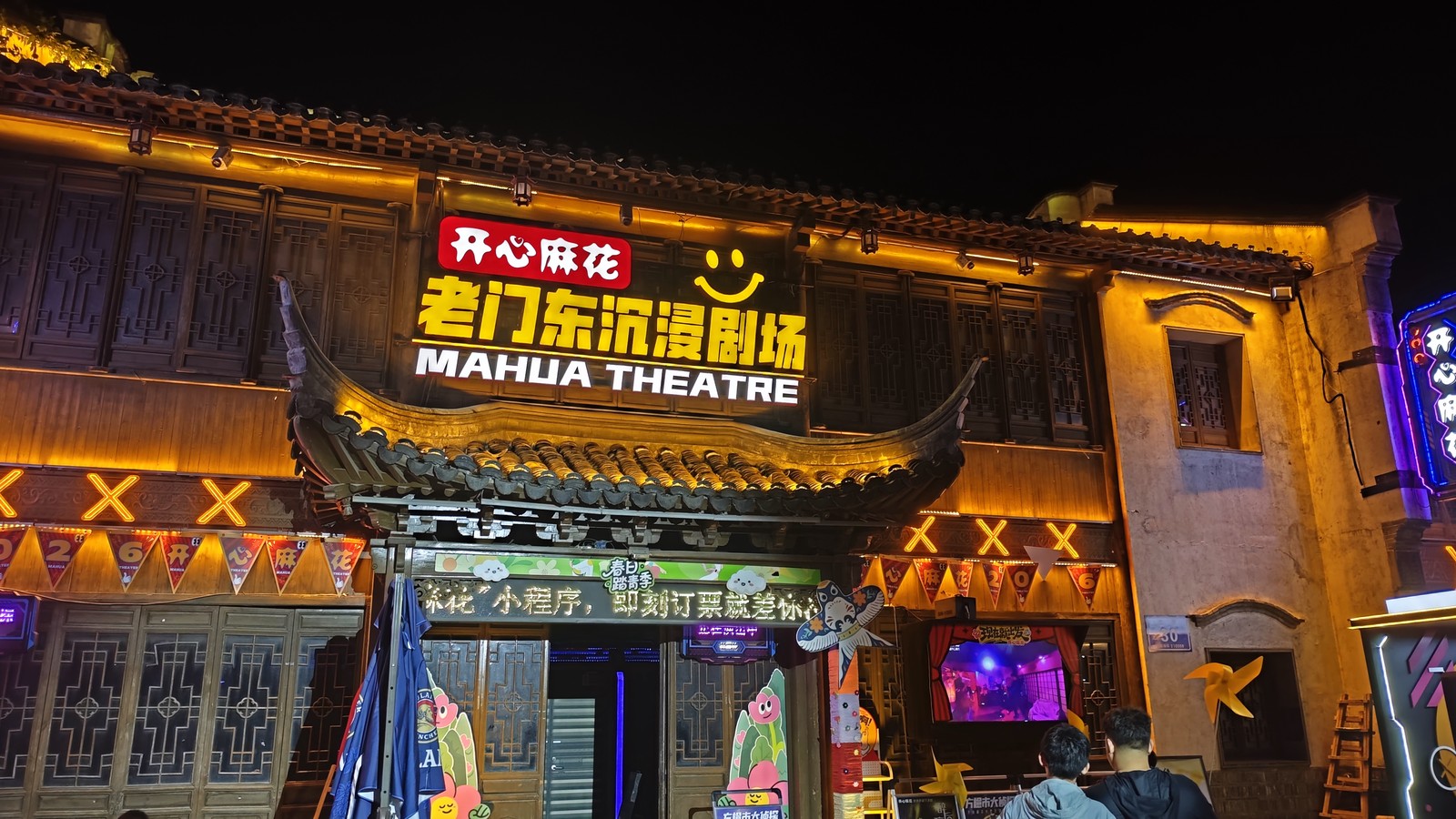
A few blocks away, the Mahua FunAge theater (Kaixin Mahua) offers a different flavor — modern sketch comedy and stage plays, fast-paced and irreverent. Where Deyunshe is tradition, Mahua is contemporary. The coexistence of the two, within walking distance of each other, says something about what Laomendong has become: a place where old and new don’t just coexist but thrive side by side.
It’s not a museum. It’s a neighborhood that figured out how to stay alive.